
Granite worktops are the epitome of style and durability, providing unmatched elegance and functionality to any home. With their unique patterns and robust nature, they’ve always been a favourite choice for kitchens and bathrooms. But while granite is known for its resilience, maintaining its beauty and strength requires a little care and attention. This guide is here to make that process straightforward and accessible. From daily cleaning tips to long-term maintenance strategies, you’ll find everything you need to keep your surfaces in pristine condition.
Daily Cleaning Tips: Keeping It Simple
Granite worktops thrive on consistent, gentle care. With a straightforward cleaning routine, you can keep their natural beauty shining while ensuring a hygienic and safe surface for your home:
Gentle Cleaning Routine
- Gather Your Tools: Use a soft cloth or sponge, mild dish soap, and warm water. Avoid abrasive materials that could scratch the surface.
- Wipe It Down: Mix a small amount of dish soap into warm water. Soak your cloth or sponge, wring it out, and gently wipe the entire surface, paying attention to edges and seams.
- Rinse and Dry: Rinse the cloth with clean water and wipe away any soap residue. Finally, buff the surface with a dry microfiber cloth to remove streaks and prevent water spots.
Quick Fix for Stains
For those occasional stubborn stains, a simple solution works wonders:
- Baking Soda Paste: Combine baking soda with water to create a thick paste. Apply it to the stained area and let it sit for 5–10 minutes.
- Gentle Scrub: Using a soft cloth, gently scrub the stain in a circular motion.
- Rinse and Dry: Wipe away the paste with clean water and dry the area thoroughly.
Pro Tip:
Always avoid harsh chemicals or rough scrubbing tools. They can strip the sealant and damage the surface.
By dedicating just a few minutes each day to cleaning, you’ll ensure they remain a stunning and functional feature of your home for years.

Essential Care Practices: Protecting Your Granite Worktops
With a few preventative measures, you can protect your worktops from common risks like scratches, stains, and heat damage, ensuring their longevity and elegance.
Protective Measures
- Use Coasters and Trivets
- Place coasters under drinks, especially those containing acidic liquids like wine or citrus-based beverages, to prevent potential etching or watermarks.
- Always use trivets or heat-resistant mats for hot pots and pans. Direct heat exposure can weaken the sealant and cause discolouration.
- Cutting Boards are a Must
- Avoid cutting directly on surfaces. Not only can this dull your knives, but it may also scratch the surface or damage the sealant.
What to Avoid
- Harsh Cleaners
- Stay away from acidic or abrasive products such as vinegar, lemon juice, bleach, or scouring powders. These can strip away the sealant and damage the natural finish.
- Ignoring Spills
- Promptly clean up spills, especially from staining agents like red wine, coffee, or oil. These substances can seep into the stone if left unattended, leading to permanent marks.
Simple Habits for Lasting Beauty
- Keep decorative items or appliances on soft pads to prevent scratches from repeated movement.
- Make it a habit to inspect and clean edges and seams regularly, as these areas are more prone to wear.
By following these simple yet effective care practices, you’ll keep your worktops looking flawless while extending their lifespan.
Restoring Shine: Polishing Granite Worktops
Over time, they might lose some of their lustre with everyday use. Polishing restores their shine and enhances the natural beauty of the stone. Whether you choose to polish at home or hire a professional, maintaining that glossy finish is easier than you think.
DIY Polishing: A Step-by-Step Guide
If your granite needs a quick refresh, here’s how to polish it safely at home:
- Choose the Right Product
- Use a high-quality granite polishing compound specifically designed for stone surfaces. Avoid generic or abrasive polishes that may cause damage.
- Clean the Surface
- Start with a thorough cleaning. Remove any dirt, stains, or residue using a mild dish soap and warm water, then dry the surface completely.
- Apply the Polish
- Following the product’s instructions, apply a small amount of polish to the surface. Use a soft cloth or microfiber pad to spread it evenly in small, circular motions.
- Buff to a Shine
- Once the polish has been applied, use a clean, dry microfiber cloth to buff the surface gently until you achieve the desired shine.
When to Call a Professional
For a more thorough restoration or heavily worn surfaces, professional polishing may be the best option. Experts use specialized tools and techniques to:
- Remove fine scratches.
- Restore a uniform shine across the surface.
- Apply an additional protective layer for lasting results.
Pro Tip:
Polishing is typically most effective after resealing. Ensure it’s adequately sealed before attempting to polish to prevent streaks or uneven finishes.
By polishing regularly or as needed, you can keep your granite worktops gleaming like new, maintaining their place as a standout feature in your home.
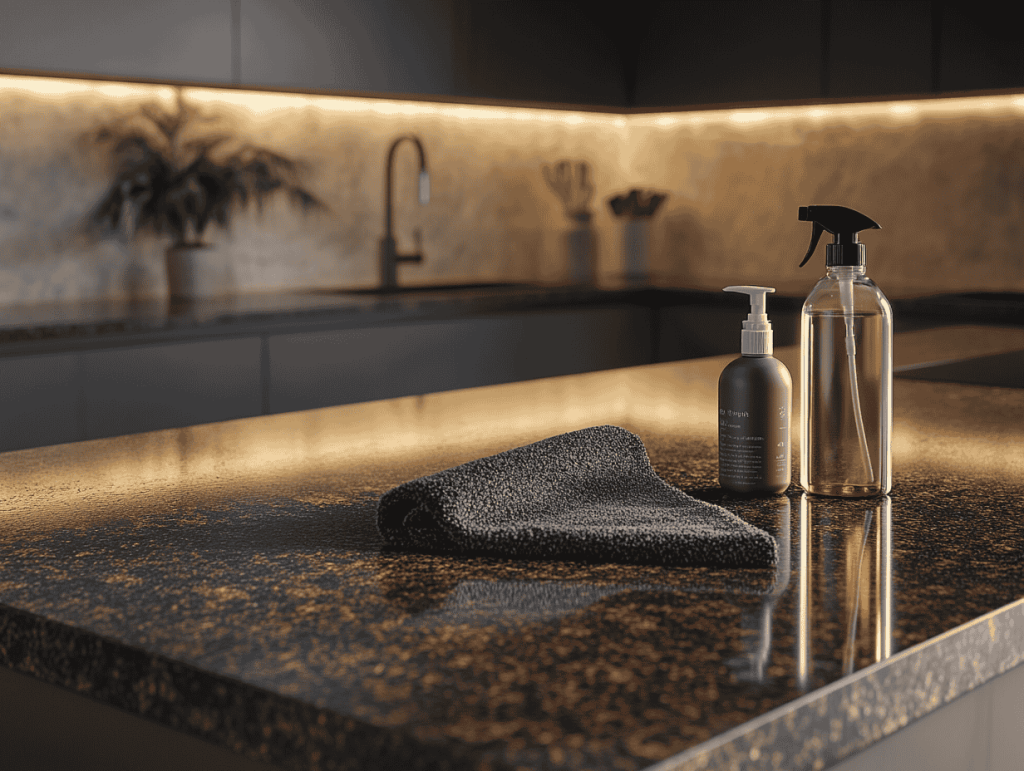
Sealing Granite: A Critical Step
Sealing granite worktops is one of the most important steps in their care routine. A good sealant creates a protective barrier that prevents liquids and stains from penetrating the stone, preserving its beauty and durability. Knowing when and how to seal your worktops is key to keeping them in top condition.
Why Sealing Matters
Granite is naturally porous, which means it can absorb liquids and stains if left unprotected. A proper sealant:
- Guards against watermarks, stains, and spills.
- Enhances the stone’s natural colour and finish.
- Provides added durability for everyday use.
When to Reseal Your Granite
Most granite worktops require resealing every 1–3 years, but the exact timing depends on factors like usage and the type of sealant used. Here’s how to tell when it’s time:
- Perform the Water Test
- Sprinkle a few drops of water on the surface.
- If the water beads up, the sealant is still effective.
- If it soaks into the stone or spreads out, it’s time to reseal.
- Look for Signs of Wear
- Stains, dull patches, or areas that absorb liquid more quickly are clear indicators that resealing is overdue.
How to Seal Your Granite: A Step-by-Step Guide
- Clean the Surface Thoroughly
- Remove dirt, grease, or stains with a pH-neutral cleaner. Ensure the surface is completely dry before sealing.
- Apply the Sealer
- Use a high-quality granite sealer and follow the product instructions carefully.
- Apply an even layer with a clean cloth, sponge, or applicator, ensuring full coverage.
- Let It Absorb
- Allow the sealer to penetrate the stone for the recommended time (usually 15–30 minutes).
- Wipe Away Excess
- Use a clean, dry cloth to remove any leftover sealer to prevent streaks or sticky residue.
- Repeat If Necessary
- For extra protection, some sealers may require a second coat. Check the instructions for guidance.
Pro Tip:
Choose a penetrating sealer specifically designed for granite. Avoid surface-only sealers, as they may wear off quickly or cause a dull finish.
With regular sealing, your worktops will remain resistant to stains and damage, ensuring they look stunning for years to come.
Preventing and Addressing Damage
Granite is renowned for its toughness, but it’s not immune to damage. Scratches, chips, and cracks can occur if proper care isn’t taken. By adopting preventative measures and knowing how to handle issues, you can keep your worktops looking flawless.
Prevention Tips: Simple Habits to Protect Your Granite
- Avoid Placing Heavy Items on Edges
- The edges and seams are their most vulnerable points. Avoid putting heavy items like large appliances or bags of groceries directly on the edges to prevent chipping.
- Don’t Stand or Sit on Worktops
- While strong, it’s not designed to support the weight of a person. Standing or sitting on your worktops can lead to cracks or cause the slab to detach from its base.
- Use Heat-Resistant Mats
- Granite can tolerate heat, but prolonged exposure to high temperatures may cause discolouration or weaken the sealant. Always place hot pots, pans, or baking trays on trivets or heat-resistant mats.
Addressing Minor Damage
- Scratches
- Light scratches can often be repaired using a granite polishing compound.
- Apply the compound to the scratched area and buff gently with a soft cloth until the scratch is less noticeable or disappears.
- Chips
- For small chips, a colour-matched epoxy or resin filler can help. Apply the filler carefully, smooth the surface, and let it cure before polishing.
- Professional help is recommended for larger chips to ensure a seamless repair.
When to Call a Professional
Some damage requires expert attention to avoid making the issue worse:
- Deep Scratches or Large Chips: Professionals can use advanced tools and materials to restore the stone’s integrity and appearance.
- Cracks: Depending on the extent of the crack, repairs might involve epoxy fillers or even replacing a section of the worktop.
- Structural Issues: If the worktop has shifted or loosened, it’s best to consult a professional for proper reinstallation.
Pro Tip:
Keep a granite-safe repair kit on hand for minor damage. These kits often include epoxy fillers and tools for small touch-ups, giving you a quick fix option for everyday accidents.
By taking preventive steps and addressing damage promptly, you can ensure your worktops remain a durable and stunning centrepiece in your home.

Dealing with Stains and Discolouration
Granite worktops are resilient, but stains and discolouration can occasionally occur due to spills, improper cleaning, or prolonged exposure to sunlight and heat. The good news? Most issues can be prevented or remedied with the right approach.
Preventing Stains and Discolouration
- Clean Spills Immediately
- Quickly wipe up spills, especially from acidic or staining liquids like wine, coffee, oil, or citrus. This prevents these substances from seeping into the porous stone.
- Use Blinds or Curtains
- If your worktops receive direct sunlight for extended periods, consider using blinds or curtains to reduce UV exposure, which can cause discolouration over time.
- Choose Gentle Cleaners
- Harsh chemicals or abrasive scrubs can strip the sealant, leaving the granite vulnerable to staining. Always opt for pH-neutral cleaning solutions.
Removing Stains: Step-by-Step Solutions
For stains that have already set, the type of stain determines the best removal method:
- Oil-Based Stains (e.g., grease, cooking oils)
- Use a paste made from baking soda and water.
- Apply the paste to the stained area, cover it with plastic wrap, and let it sit for 24 hours.
- Remove the paste, rinse the area, and dry thoroughly.
- Organic Stains (e.g., coffee, tea, wine)
- Combine hydrogen peroxide and baking soda to form a thick paste.
- Spread the paste over the stain, cover with plastic wrap, and let it sit overnight.
- Wipe off the paste, rinse, and dry the area.
- Rust or Metallic Stains
- Use a poultice with a commercial rust remover specifically designed for granite.
- Follow the product instructions carefully, ensuring it’s safe for natural stone.
- General Stains
- A simple poultice of baking soda and water is effective for most minor stains.
Pro Tip: How to Make and Use a Poultice
- Mix the Ingredients
- Combine the recommended stain-specific material (e.g., baking soda, hydrogen peroxide) with water or another suitable liquid to create a thick paste.
- Apply and Cover
- Spread the paste over the stain, about 1/4 inch thick. Cover with plastic wrap and seal the edges with tape.
- Let It Sit
- Leave the poultice on for 24 hours to allow it to draw the stain out.
- Remove and Clean
- Remove the poultice, clean the area with a pH-neutral cleaner, and dry thoroughly.
When to Call a Professional
If the stain persists despite your best efforts, or if the discolouration is widespread, consult a professional. They can use specialized tools and techniques to restore your granite’s original beauty.
By staying vigilant and addressing stains promptly, you can keep your worktops looking as good as the day they were installed.
Choosing the Right Cleaning Products
The right cleaning products play a significant role in preventing damage and preserving their natural finish. Here’s how to choose and use them effectively.
Safe Cleaning Products for Granite
- Mild, pH-Neutral Cleaners
- Opt for cleaning products specifically designed for granite. These are gentle yet effective, ensuring the surface and sealant remain intact.
- A simple solution of mild dish soap diluted in warm water works well for daily cleaning.
- Granite-Safe Disinfectants
- If disinfecting is necessary, pick products labelled safe for natural stone. Alternatively, create a gentle solution with isopropyl alcohol (70%) diluted with water.
- DIY Stain Removers
- Baking soda and water make an excellent paste for general stains. For organic stains, add hydrogen peroxide for added effectiveness.
- Polishing Agents
- Use high-quality granite polish occasionally to restore shine and enhance the protective barrier.
What to Avoid
- Harsh Chemicals
- Cleaners containing vinegar, ammonia, lemon juice, bleach, or other acidic substances can degrade the sealant and damage the granite.
- Abrasive Cleaners
- Scouring powders, steel wool, or rough scrubbing pads can scratch the surface, dulling its shine and compromising its finish.
- Multi-Surface Cleaners
- General-purpose sprays may contain ingredients unsuitable for granite. Always check labels for compatibility with natural stone.
Tips for Effective Cleaning
- Test First: Before using a new product, test it on a small, inconspicuous area to ensure it doesn’t cause discolouration or damage.
- Rinse and Dry: After cleaning, always rinse with clean water to remove residues, then buff with a microfiber cloth to prevent water spots.
- Consistency Matters: Stick to a routine with safe products to prevent dirt and grime build-up.
Pro Tip:
Store granite-safe cleaning supplies separately from general cleaners to avoid accidental misuse. Consider labelling them for added convenience.
Choosing the right cleaning products is essential for maintaining your stone’s elegance and durability. With safe and effective solutions, you can enjoy sparkling, well-protected surfaces every day.

Long-Term Maintenance for Granite Worktops
Granite worktops are a long-term investment, and with proper care, they can retain their beauty and functionality for decades. Long-term maintenance focuses on periodic resealing, professional care when needed, and being vigilant about wear and tear.
Resealing Granite Worktops
Sealing granite is not a one-time task. Over time, the protective sealant wears down, leaving the stone vulnerable to stains and damage. Here’s what you need to know about resealing:
- How Often Should You Reseal?
- On average, your worktops require resealing every 1–3 years.
- Darker varieties may need less frequent resealing, while lighter varieties often benefit from annual maintenance.
- Signs It’s Time to Reseal
- Water Test: Sprinkle a few drops of water on the surface. If the water soaks into the stone rather than beading up, it’s time to reseal.
- Staining: If liquids are absorbed quickly or stains are forming more easily, the sealant is wearing off.
- Dullness: A lack of shine can indicate that the sealant requires renewal.
- Professional vs DIY Resealing
- DIY resealing is relatively straightforward with high-quality granite sealers and careful adherence to product instructions.
- Professional resealing offers peace of mind with expert application and ensures maximum durability.
Professional Care for Long-Term Durability
Some aspects of maintenance are best left to professionals. This includes:
- Deep Cleaning: For stubborn grime or build-up that regular cleaning can’t handle.
- Polishing: Restores the granite’s natural shine and removes surface imperfections.
- Repairs: Chips, cracks, or structural issues require expert attention to ensure seamless and durable fixes.
Periodic Inspection
- Edges and Seams
- Regularly check for signs of wear or damage along edges and seams, as these areas are more vulnerable.
- Sealant Condition
- Perform periodic water tests to monitor the effectiveness of your sealant.
- Surface Uniformity
- Look for areas of dullness or discolouration that might signal the need for attention.
Pro Tip:
Create a long-term maintenance schedule, including reminders for resealing and periodic professional cleaning. Staying proactive prevents minor issues from escalating into costly repairs.
By committing to a long-term care routine, you’ll keep your worktops in excellent condition, ensuring they remain the stunning centrepiece of your home for years to come.
Frequently Asked Questions About Granite Worktop Care and Maintenance
1. How often should I clean my granite worktops?
For daily maintenance, cleaning your granite worktops after each use is best. This helps prevent the build-up of dirt, grime, and potential stains. Use a soft cloth or sponge with a mild, pH-neutral cleaner for best results.
2. Can I use vinegar or bleach to clean my granite worktops?
No, using vinegar, bleach, or other acidic or harsh cleaners on granite is not recommended. These substances can damage the sealant and etch the surface of the granite, leading to dull spots or discolouration.
3. How often should I seal my granite worktops?
On average, granite worktops should be resealed every 1-3 years. However, this can vary depending on the granite type, the sealant’s quality, and the amount of use the worktops see. Perform a water test regularly to check the effectiveness of the sealant.
4. Can I cut directly on my granite worktops?
While granite is a hard stone that can withstand cutting, cutting directly on your worktops is not recommended. This can dull your knives and potentially scratch the granite. It’s best to use a cutting board.
5. What should I do if I spill wine or other acidic substances on my granite worktops?
If you spill wine, lemon juice, vinegar, or other acidic substances on your granite worktops, clean it up immediately. These substances can etch the granite and cause stains. Use a soft cloth or sponge with a mild, pH-neutral cleaner to clean the spill.
6. What should I do if my granite worktops become chipped or cracked?
If your granite worktops become chipped or cracked, it’s best to call in a professional. They can assess the damage and recommend the best course of action. Attempting to repair the damage yourself can often make the problem worse.
7. Can I stand or sit on my granite worktops?
No, standing or sitting on your granite worktops is not recommended. While granite is strong and durable, it’s not designed to bear people’s weight. This can lead to cracks or even cause the worktop to dislodge from the supporting cabinets.
Conclusion
Granite worktops are more than just a functional surface—they’re an investment in style, durability, and timeless beauty. By following a routine of regular care, taking preventative measures, and addressing any issues promptly, you can ensure your worktops stay in pristine condition for decades.
With proper cleaning, regular resealing, and the occasional polish, they’ll remain resistant to stains, scratches, and wear. Simple habits like using coasters, cutting boards, and heat-resistant mats go a long way in protecting the surface, while professional assistance can handle tougher challenges like repairs or deep restoration.
If you’re ever unsure about maintaining or restoring your worktops, don’t hesitate to seek professional advice. Whether you need help with resealing, polishing, or repairs, our team is here to guide you and ensure your granite looks its best.
Keep your worktops shining bright—they deserve it!
 Concrete-effect
 Granular
 Industrial-effect
 Marble-effect
 Solid Colour
 Stone-effect
 Terrazzo
 Wood-effect
 Natural Granite
 Natural Limestone
 Natural Marble
 Natural Quartzite
 White
 Grey
 Black
 Beige
 Brown
 Cream
 Off-white
 Blue
 Gold
 Yellow